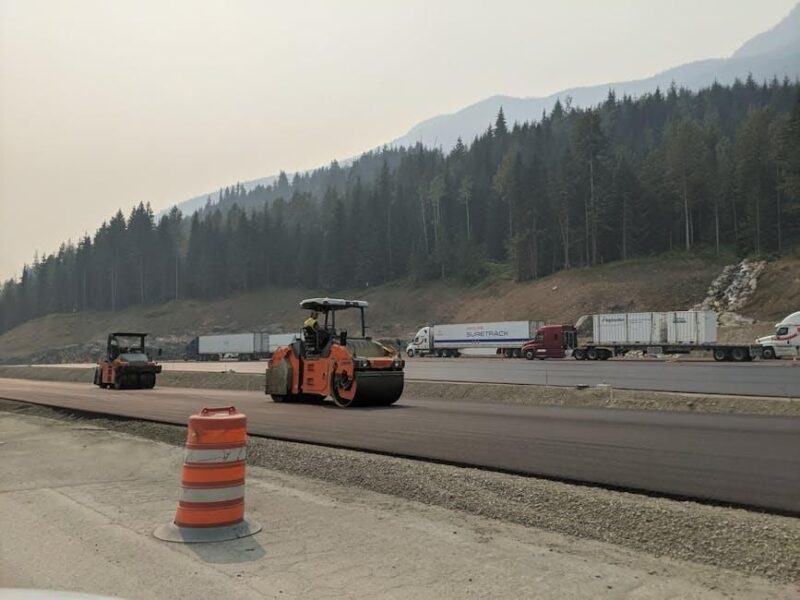
Before paving crews arrive with trucks, rollers, and hot-mix asphalt, a quieter but highly important part of the project has already happened. Contractors must estimate how much asphalt the job will require. That number affects pricing, delivery timing, labor coordination, plant scheduling, and the flow of work across the site. If the estimate is too low, paving may stop while crews wait for more material. If it is too high, the project may carry unnecessary cost and waste.
Asphalt quantity planning is not only a math exercise. It is a field-based process that combines measurements, pavement thickness, density, compaction behavior, waste allowances, and site conditions. A clean rectangular parking lot may be simple to calculate, while a commercial property with curves, islands, drainage structures, patch repairs, and uneven grades may require closer judgment. Good estimating helps contractors keep paving work continuous, which is essential because asphalt must be placed and compacted while it is still within the proper temperature range.
How Is Asphalt Tonnage Calculated?
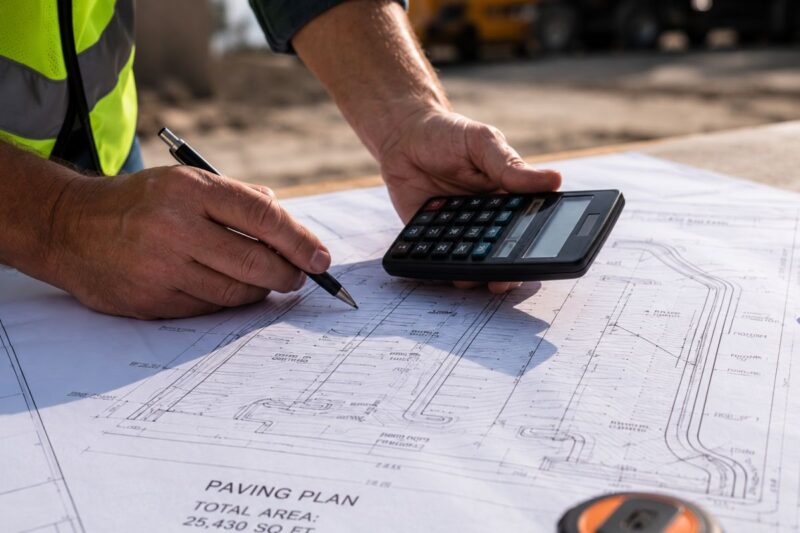
Contractors estimate asphalt quantities by combining pavement dimensions, installation depth, and asphalt density before placing material orders. Accurate calculations help paving crews coordinate delivery schedules, avoid material shortages, and control resurfacing costs during commercial and municipal projects. Understanding calculating asphalt tonnage allows property owners, estimators, and project managers to predict how much hot-mix asphalt a paving project requires before milling, overlay installation, or full resurfacing begins.
Most paving estimates start with total pavement area measured in square feet. Contractors multiply that area by the planned asphalt thickness to determine material volume, then apply asphalt density values to convert volume into tons. Deeper overlays require substantially more asphalt because each additional inch increases total material weight across the full pavement surface.
Compaction also changes final tonnage requirements because freshly installed asphalt compresses under rollers during paving operations. Contractors account for that density adjustment before placing orders with asphalt plants or scheduling haul trucks for delivery. Milling depth further affects calculations during resurfacing projects since removed pavement thickness usually matches the planned asphalt replacement layer.
Commercial paving projects often include waste allowances to prevent delays caused by unexpected material shortages. Uneven pavement conditions, grading corrections, and edge transitions can increase asphalt usage beyond the original estimate. Precise tonnage planning improves bidding accuracy, streamlines paving logistics, and helps contractors maintain continuous asphalt installation without interruption.
Measuring the Pavement Area
The first estimating step is determining the total paved area. Contractors may use site drawings, field measurements, digital mapping tools, or direct layout checks to calculate square footage. On simple projects, the surface may be measured as one large rectangle or a combination of smaller rectangles. On more complex sites, estimators break the pavement into sections so curves, islands, drive lanes, entrances, loading areas, and irregular edges are not ignored.
Accurate area measurement matters because even a small mistake can grow into a large material difference across a wide pavement surface. A few extra feet along a long drive aisle or roadway can add meaningful tonnage once thickness and density are applied. Contractors also look at whether the paved area includes tie-ins, transitions, patch zones, or areas that need feathering into existing pavement. These details shape the material order long before the first truck leaves the asphalt plant.
Choosing the Planned Asphalt Thickness
Thickness is one of the strongest drivers of asphalt quantity. A thin overlay used to refresh a stable surface requires much less material than a thicker structural layer designed for heavier traffic. Parking lots, residential drive lanes, commercial access roads, industrial yards, and municipal streets may all require different asphalt depths depending on traffic loads and existing pavement condition.
Contractors do not choose thickness casually. They consider whether the project is a surface overlay, a mill-and-fill resurfacing job, a patch repair, or new pavement construction. If the surface has cracking, rutting, drainage issues, or base movement, the selected thickness may need to support both appearance and performance. Estimators also check how the finished elevation will meet curbs, sidewalks, garage aprons, drainage inlets, and concrete edges.
Why One Extra Inch Matters
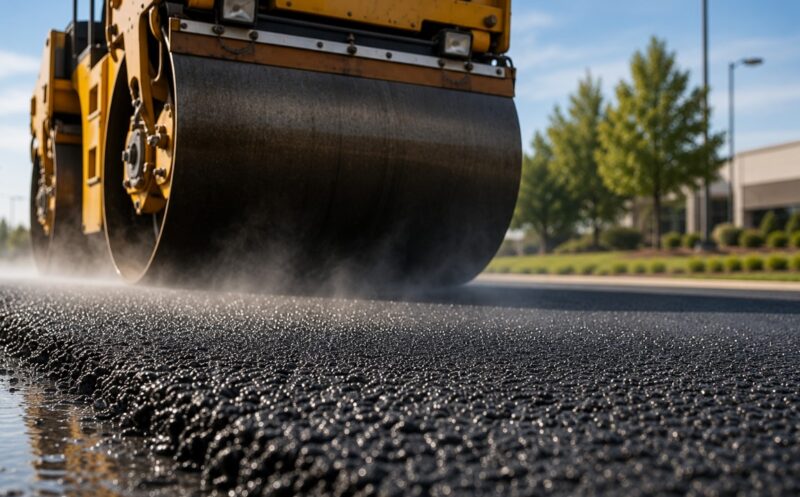
An additional inch of asphalt may not sound dramatic, but across thousands of square feet it can significantly increase total tonnage. This is why contractors carefully confirm design thickness before ordering material. A small adjustment in depth can change trucking needs, plant coordination, project cost, and installation time.
Accounting for Density and Compaction
Asphalt is ordered by weight, not simply by surface area. After calculating volume, contractors use asphalt density to convert the material requirement into tons. Density can vary depending on the asphalt mix, aggregate structure, binder content, and project specifications. Because hot-mix asphalt is compacted after placement, the estimate must account for how the loose material will settle under rollers.
Compaction is essential to pavement performance. Proper rolling reduces air voids, strengthens the mat, and helps the finished surface resist traffic wear. If estimators ignore compaction behavior, the project may not receive enough asphalt to achieve the planned finished depth. This is why experienced paving teams connect estimating with field execution rather than treating tonnage as a detached spreadsheet number.
Evaluating Existing Pavement Conditions
Existing pavement can change asphalt quantity requirements quickly. A surface with uneven grades, depressions, edge failure, potholes, or old patchwork may need additional material to create a smooth and properly draining surface. Contractors may identify low areas that require leveling before the main overlay is installed. These leveling courses can add tonnage beyond the basic area-and-depth calculation.
Cracks and surface defects also influence preparation. While asphalt paving and concrete repair are different systems, property owners often evaluate nearby hard surfaces together when planning exterior maintenance. Driveways, walkways, and pavement edges may all need attention, and resources discussing concrete crack fillers for driveways show how surface deterioration can become part of a broader property-care plan before larger paving work begins.
Planning for Waste, Edges, and Transitions
A professional estimate usually includes a waste factor. Asphalt can be lost through irregular edges, handwork, transitions, truck cleanout, temperature loss, and field adjustments. While contractors try to avoid excess, a small allowance helps prevent the more expensive problem of running short during active paving.
Edges and transitions are especially important. A parking lot may need careful tie-ins at entrances, sidewalks, loading docks, ramps, and drainage structures. Roadway work may require matching existing lanes, shoulder elevations, curb lines, and utility covers. These areas often need hand placement or extra attention from the crew, and they may use more material than a clean machine-laid pass across open pavement.
Coordinating Asphalt Plants and Haul Trucks
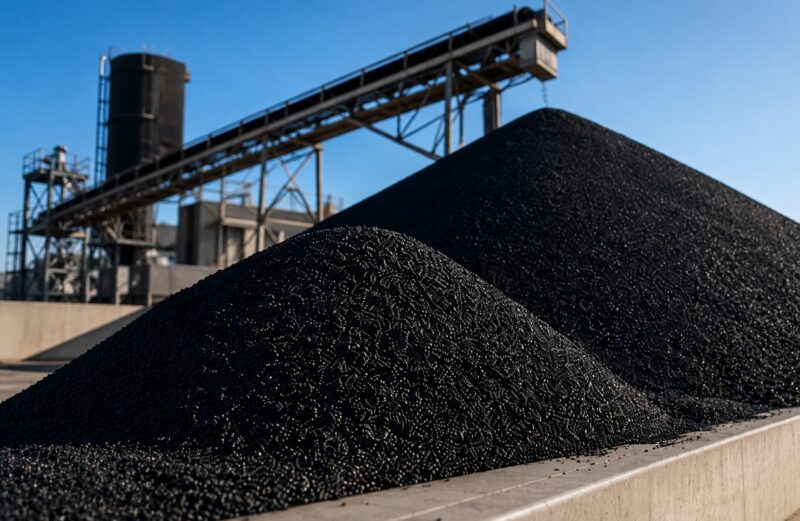
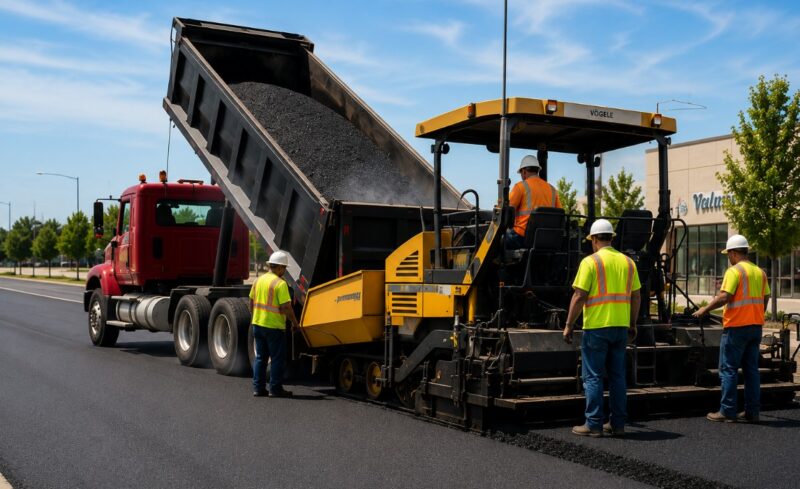
Once the tonnage estimate is set, contractors use it to schedule production and delivery. Asphalt plants need to know how much material to produce and when trucks should arrive. Haul truck coordination keeps the paving machine supplied without creating long waits or temperature problems. Too few trucks can stop the paving train. Too many trucks can crowd the site and leave asphalt cooling before placement.
Material choice also connects with pavement use. High-traffic public spaces require surfaces that balance durability, safety, drainage, maintenance, and user experience. Broader design guidance on choosing pavements for high-traffic public spaces reflects the same principle contractors consider during asphalt planning: pavement should be selected and installed according to how the space will actually be used.
Brand Section: Asphalt Coatings Company
Asphalt Coatings Company operates in a field where accurate estimating supports both project quality and client confidence. Asphalt quantity planning affects more than the bid price. It influences scheduling, crew productivity, delivery timing, compaction quality, and the ability to complete paving without unnecessary interruptions. When the material estimate is carefully prepared, the entire project has a stronger foundation.
For commercial property owners, facility managers, and municipal decision-makers, this kind of planning helps reduce uncertainty. A contractor that explains how quantities are calculated can help clients understand why pavement area, thickness, density, waste allowance, and site conditions all matter. Clear communication before paving begins makes it easier to plan budgets, closures, deliveries, and reopening expectations.
Conclusion
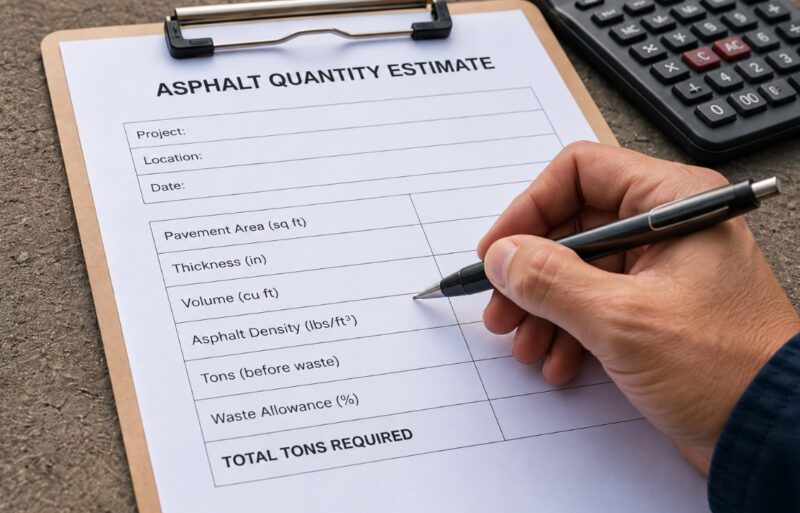
Estimating asphalt quantities before paving begins requires careful measurement and practical field experience. Contractors calculate pavement area, select the proper thickness, apply density values, account for compaction, evaluate existing surface conditions, and include reasonable allowances for waste and transitions. Each of these steps helps determine how many tons of asphalt the project will require.
A reliable tonnage estimate keeps the paving process moving smoothly. It helps crews avoid material shortages, supports accurate bidding, improves truck scheduling, and protects the quality of the finished pavement. Whether the work involves a small parking area, a commercial resurfacing project, or a municipal roadway, asphalt quantity planning is one of the quiet details that decides whether paving runs smoothly or turns into a costly pause in the middle of the mat.